Walmart Data Ventures · Design System

Six products.
One language.

Data Ventures builds the analytics platforms Walmart's merchants run on. I designed the system underneath them, so six teams stopped reinventing the same patterns and started shipping as one.

Role
Design lead and system architect. Audit, architecture, components, governance, rollout.
Built
The DV design system: a data-specialized extension of Walmart Living Design.
Context
Walmart Data Ventures, the Luminate suite. Six products, six teams.

A note. The screens here are approved, public materials from the DV system. The deeper token architecture, governance model, and adoption playbook I am glad to walk through privately.

The problem

Six teams, six versions of the same table.

Six products, and every team had built its own way. Roughly forty percent of the design was debt: patterns rebuilt from scratch, components that looked alike but behaved differently, a patchwork of outside UI kits that never quite fit a data-heavy product. Nobody had called it a problem yet.

So I did. Before I drew a single screen, I audited every design system already in play across Walmart. The pattern was hard to miss: teams kept standing up their own isolated, heavily customized systems that looked sharp in month one and buckled by month six.

A system that never scales is just debt with a coat of paint.

The real problem

The tempting fix was a brand-new system.

The obvious move was to build a fresh DV system from scratch, owned outright and fast to show. But that is exactly the island I had just watched other teams strand themselves on. And six teams already mid-flight would route around anything that felt like a tax.

The real problem was never missing components. It was adoption and endurance. A system nobody adopts, or one that cannot outlive its first release, is just more debt. So I anchored DV on Living Design, Walmart's proven corporate language, and specialized its atoms for data. Grounded in what already worked, built to go the distance.

A system nobody adopts is just more debt.

The principle

Model rooms, not parts.

A design system is not a box of buttons teams reassemble from scratch. I built DV as a library of experiences. Think model rooms: a step wizard, an actionable data table, a dashboard with variants. A team walks into the room and furnishes it with their own content, and the experience stays familiar. Consistency here is not sameness. A kitchen and a bedroom should not look alike; each should be instantly familiar for what you came to do.

Extend the foundation
DV builds on Living Design, so every core improvement lands for free.
Never an island.
Furnish, don't rebuild
Teams change the steps, content, and actions; the room stays intact.
Fast, and still coherent.
Gate what's new
A genuinely new component earns its place: prove reuse, prove scale.
It grows on purpose.
The system

Built once. Shipped everywhere.

The audit made the case. Living Design gave it roots. Then it became real: an ecosystem of configurable components, a token architecture, a chart suite, and the flagship data table, adopted as the standard across every product in the suite.
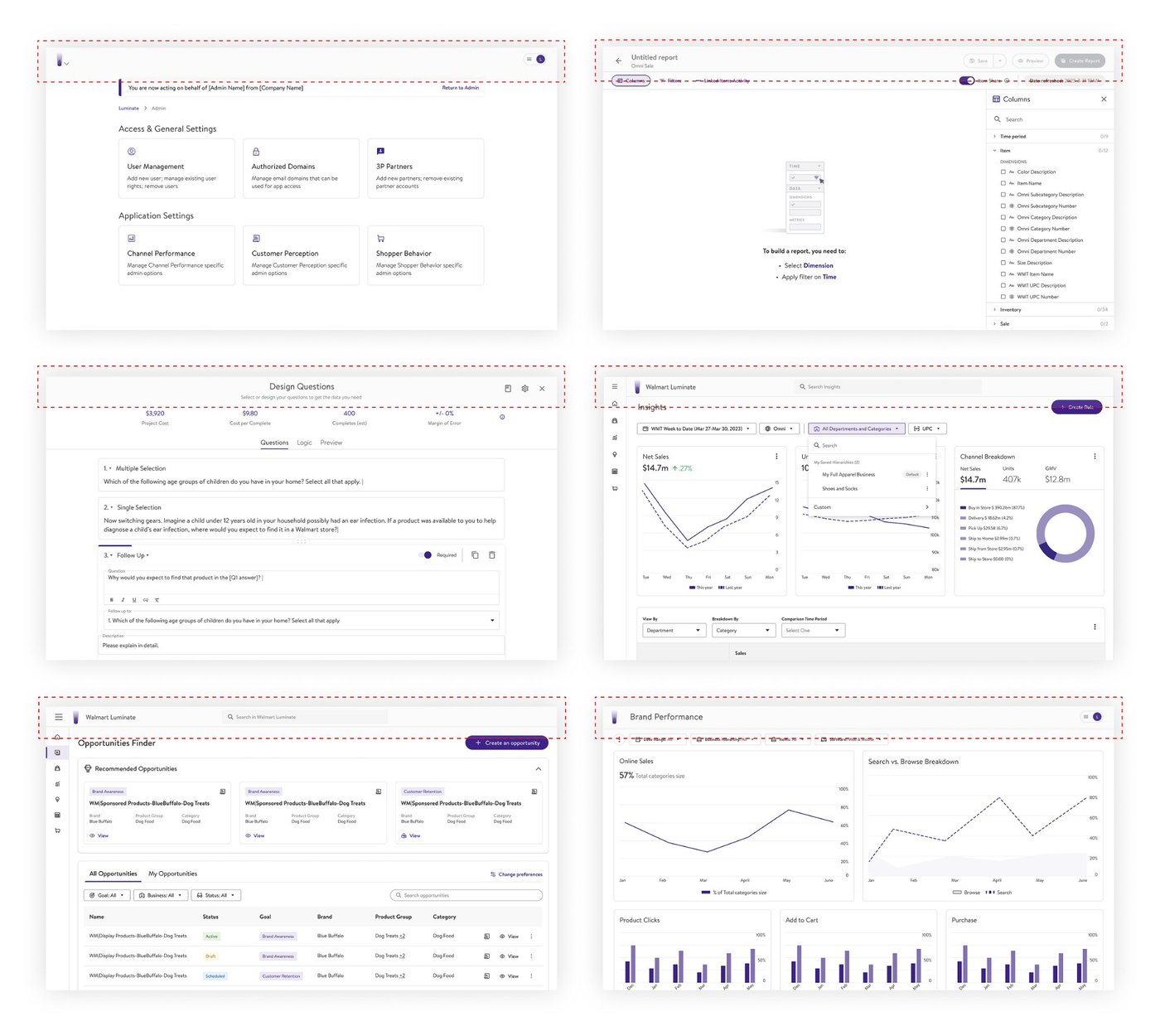
Audit mapping consistency gaps and duplicated patterns across the six Luminate products

The audit that made the case. Consistency gaps and duplicated patterns, mapped across the suite. This is what turned a shared system from a nice idea into a funded one.
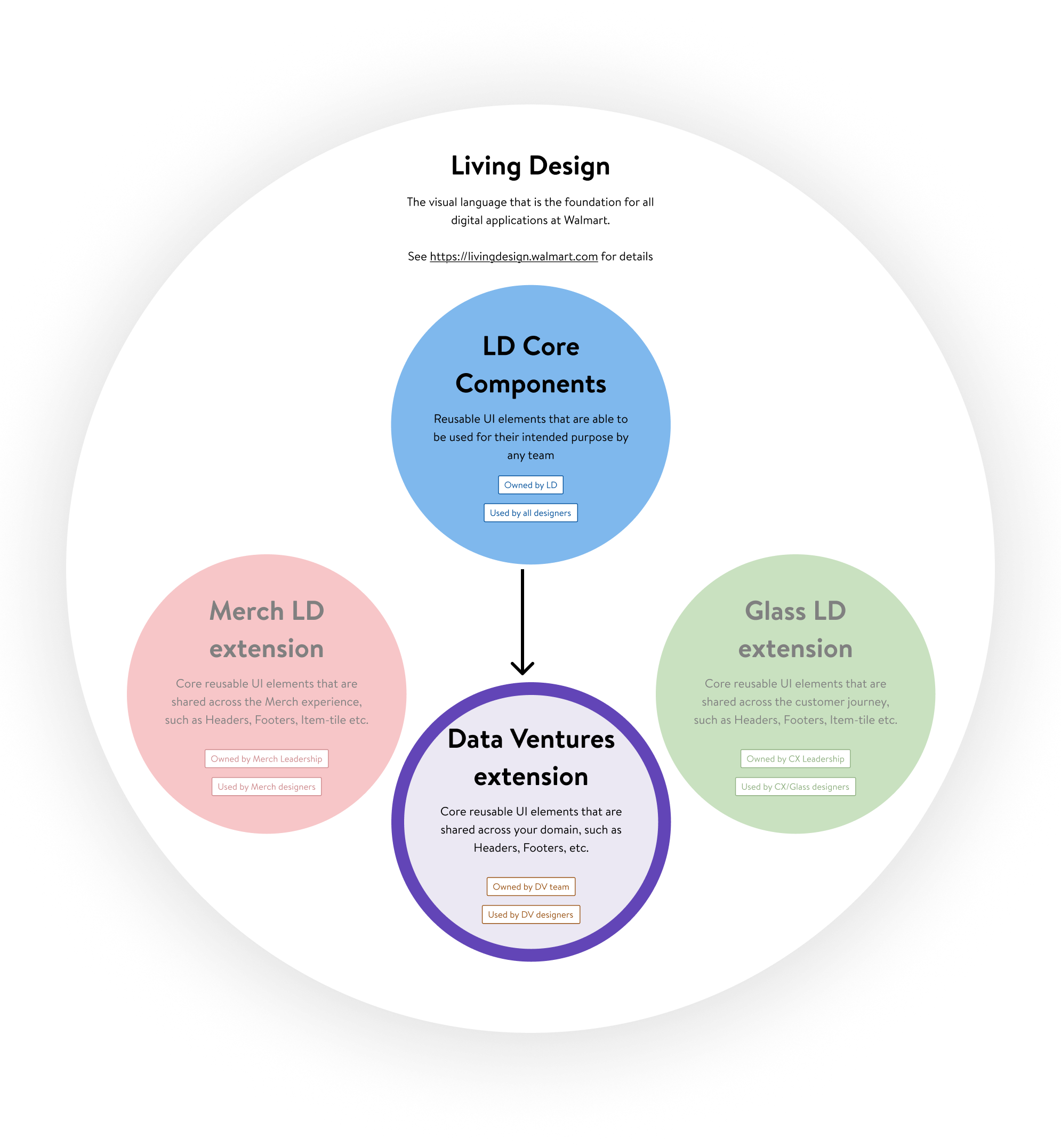
Ecosystem diagram: DV as a specialized extension of Walmart Living Design core components

The architecture. DV is not a standalone system. It extends Walmart's Living Design foundation and specializes it for data, so every improvement upstream flows down for free.

Live component · Figma

One component, every product's data. The DV Line Chart and its variants: theme, line count, footer, axis, header, all configured through a clean props layer. Teams furnish it; they never fork it.
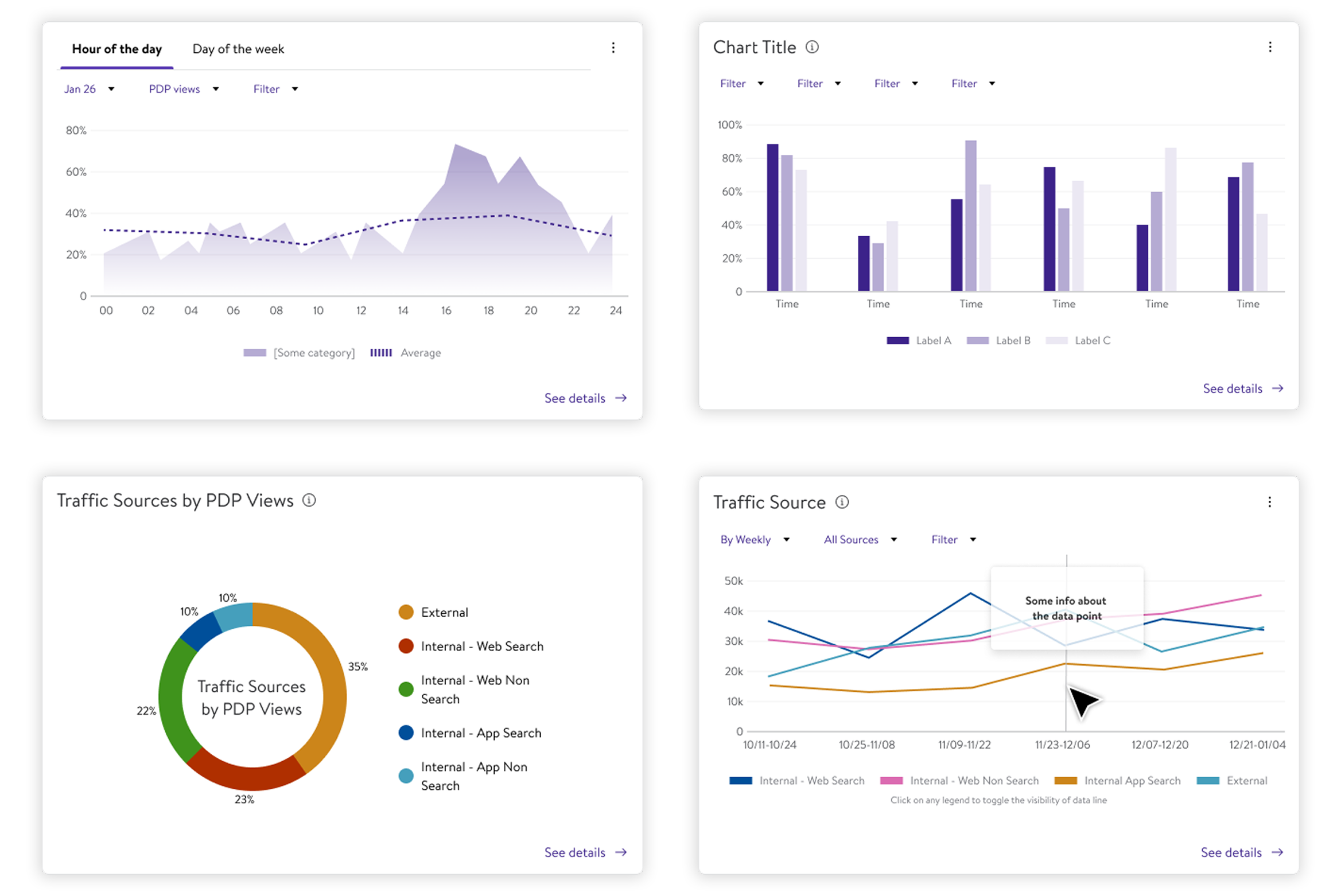
Chart suite: area, bar, donut, and multi-line components in product context

The chart suite. Area, bar, donut, and multi-line, one visual language for data across the suite.
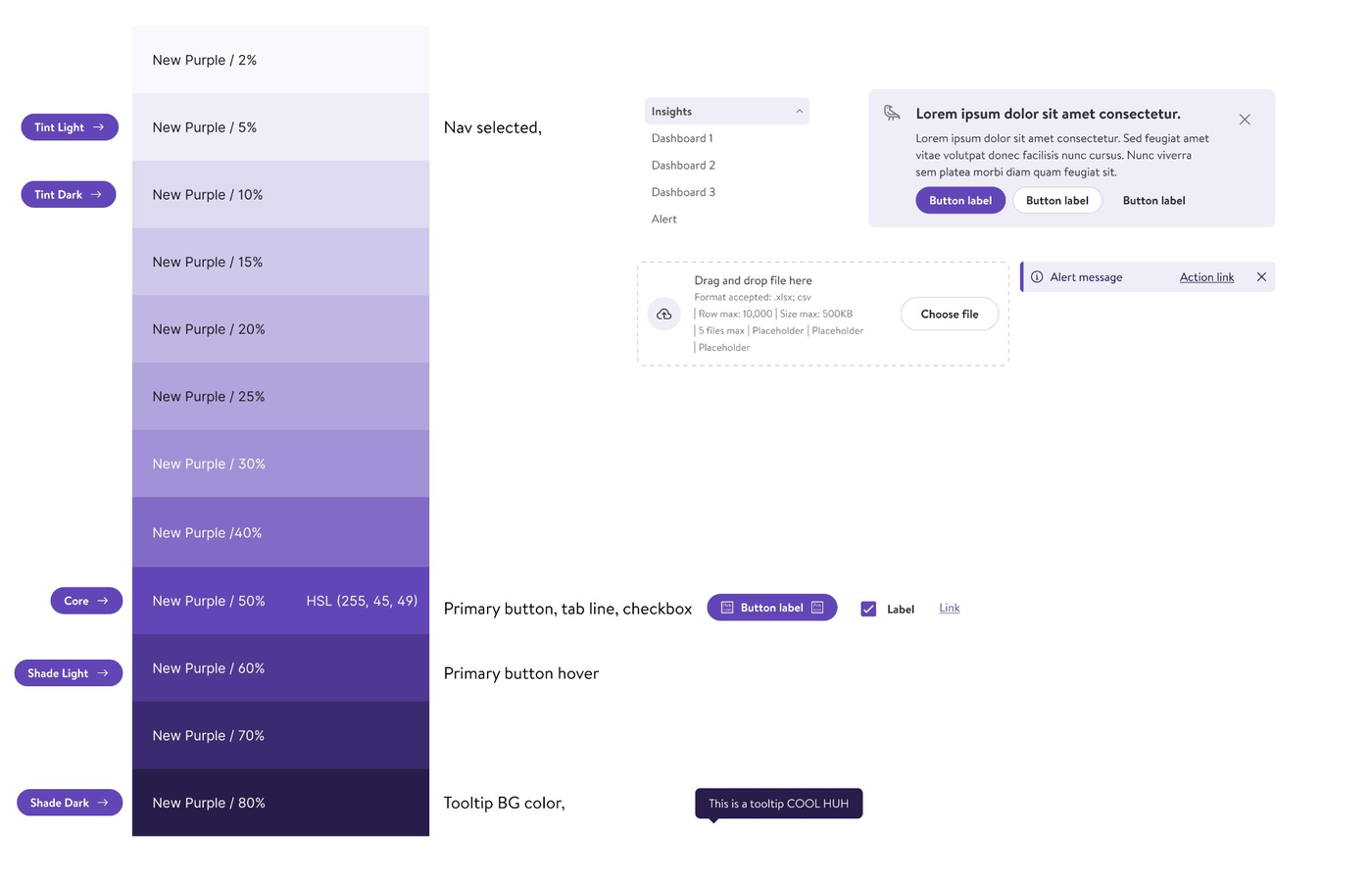
Token architecture: color scale, component variants, and usage guidelines

The token layer. An accessible color scale and component variants, with the palettes generated by AI and reviewed by hand.
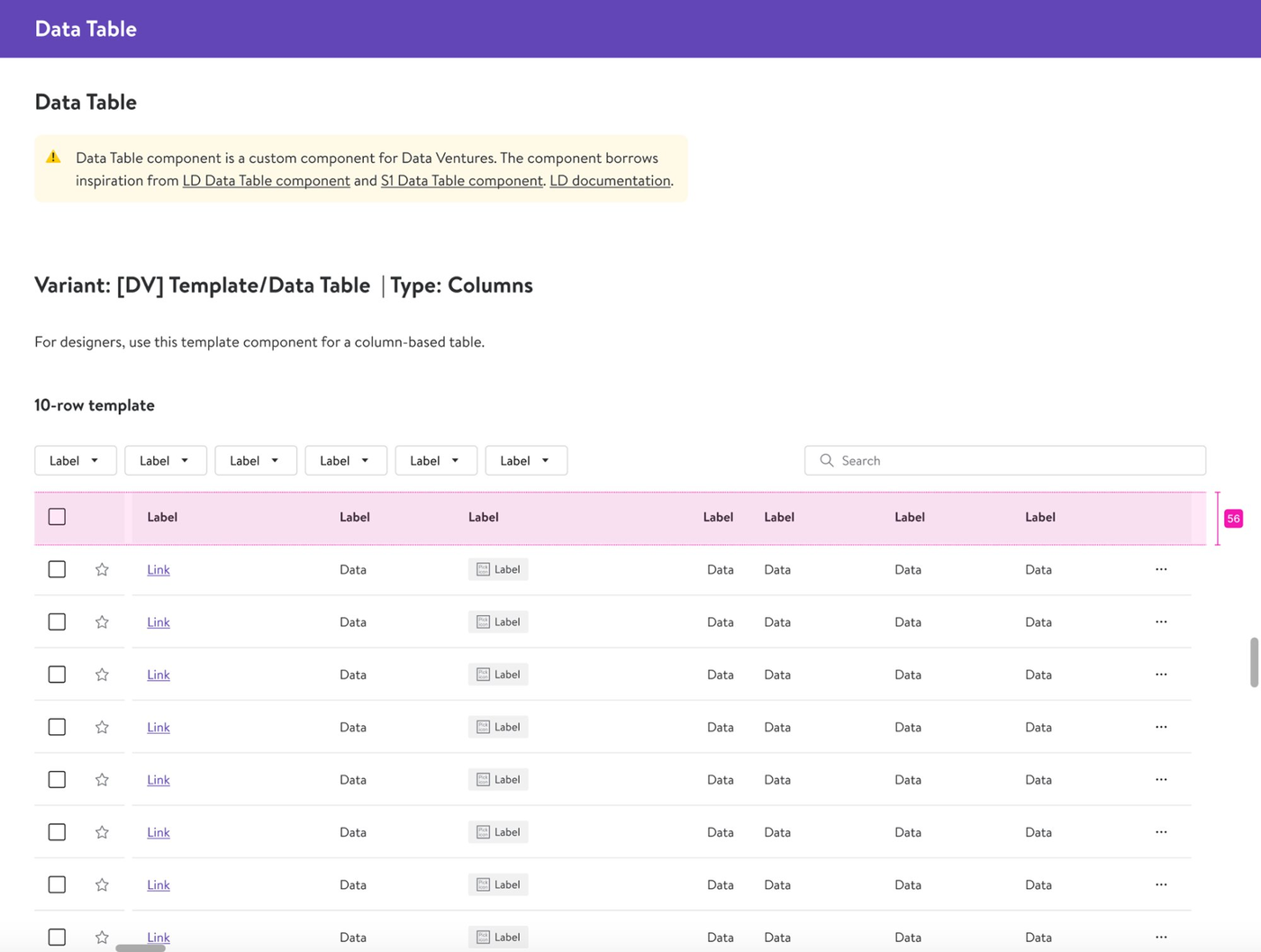
The flagship DV Data Table component: schema-agnostic, configurable, with filters, search, and column variants

The flagship. A schema-agnostic Data Table that accepts any data shape without a rewrite. It became the standard the whole suite adopted.

Adoption

You don't sell a system. You prove it.

A system teams feel is imposed gets worked around. So I did not pitch it in a deck. I picked the one product still in beta, Insights Activation, where the stakes were low and the room to show was high.

I sat with their lead designer and PM, and together we rebuilt their most complex screen, a dense data table, with the new component, side by side as partners. That product shipped in under six months with zero design debt, and it became the model the other five teams followed.

The proof did the convincing.

The decisions

Three calls that made it hold.

Extension over standalone.
Building on Living Design meant a more complex architecture and a dependency on another team's roadmap. The return: every improvement to the foundation lands in DV for free, and DV never became the island the other systems were.
Configure over fork.
Teams had already started their own tables and filters. Blessing those forks would have been the easy system. Instead we consolidated them into configurable components. The cost was saying no. The return was zero design debt for every product that launched after.
And one I got wrong first.
Early on I said yes to every custom-component request in office hours, and the library started turning into a junk drawer of one-offs. So I put a gate on it: prove reuse, prove scale. The surprise was that in those reviews, teams kept finding someone had already built what they needed. A system is only as strong as what it keeps out.
Heard across the org

It unified our product interfaces and gave us a cohesive experience across every application. It has been a game changer.

Design Director, Data Ventures

The reusable components sped up our builds and raised the quality and reliability of everything we shipped.

Engineering Lead, Core Services
Outcome

One foundation. Zero debt.

The system shipped its flagship in under six months with zero design debt, made teams about thirty percent faster, and became the only suite in the org running on one foundation. I built it to keep growing without me, through office hours and component authoring. It still is.

Next case Terran·AI-triaging for Apple Pay